Monday, November 19, 2018

Heat Wave

HEAT WAVE: TIPS TO STAY COOL
Botswana has of late been experiencing high temperatures with day time temperatures reaching the ranges of 36 - 40 degrees centigrade. This poses an increased health risk and may impact differently on the health of individuals as exposure to such temperatures may lead to heat cramps, heat stroke, heat exhaustion and severe sunburns and complications of chronic diseases such as Hypertension, Asthma, other respiratory illness etc.
The university community is therefore advised to protect themselves against these high temperatures as follows:-
 Drink Plenty of Fluids - Increase your fluid intake regardless of your activity level. During hot weather, you will need to drink more liquid than your thirst indicates. Avoid drinks containing alcohol and try to limit consumption of caffeinated beverages as they cause you to lose more fluid.
 Replace Salt and Minerals - Heavy sweating removes salt and minerals from the body, which are necessary for your body. The best way to replace salt and minerals is to drink fruit juice or a sports beverage.
 Wear Appropriate Clothing and Sunscreen - Wear as little clothing as possible when you are at home.
If you must go outdoors, protect yourself from the sun by wearing a wide-brimmed hat, umbrella along with sunglasses, and put on sunscreen of SPF 30 or higher.
 Slow down. Reduce or cancel strenuous, outdoor activities or reschedule them for the coolest times of the day.
 Take frequent breaks if working outdoors
 Adjust to the Environment - Be aware that any sudden change in temperature, such as an early heat wave, will be stressful to your body.
 NEVER leave children or pets alone in closed vehicles

Friday, September 21, 2018

MASISI FACES DEATH BY A THOUSAND CUTS

President Mokgweetsi Masisi is facing a vicious push back from the all powerful tourism old boys’ network which was the invisible force behind former President Ian Khama’s administration.
The recent elephants’ massacre propaganda war waged by tourism interests against the Masisi administration is believed to be part of a big “death by a thousand cuts” strategy employed by former President Khama’s allies to chip Masisi’s power.
Former President Khama is part of a powerful international network of photographic safari operators with financial interest in the Botswana tourism industry.
The network is mobilizing to protect the gains it made under former President Lt Gen Ian Khama in their long battle with trophy hunting safari operators.
Fighting the photographic safaris corner alongside Khama is Mike Chase Director of Elephant Without Borders (EWB) who last week shared an unconfirmed report with the international media breaching his contractual agreements with his employer, Ministry of Environment, Wildlife, and Tourism (MEWT).
Addressing a Public Accounts Committee (PAC) sitting on Friday Permanent Secretary at MEWT Thato Raphaka said the right to disseminate that kind of information lies with the Ministry and not the contractor, EWB.
He said they were still investigating the motive behind Chase’s rash behaviour with a view to hand the matter over to the Attorney Generals Chambers for possible litigation. “His actions amount to breach of contract,” Raphaka said.
Even worse, it has emerged that Chase has failed to substantiate claims of the ‘87’ poached elephants that he alluded to in his controversial report that went viral last week. Instead of the alleged 87, only seven elephant remains were spotted by the team of Botswana Defence Force (BDF), Department of Wildlife and National Parks, and other security organs that went to investigate.
Sources close to the old boys’ network insist that Mike Chase’s elephants massacre claims are less about protecting elephants and more about defending vested interests.

Wednesday, August 29, 2018

Exhibition

Do not miss OKAVANGO ARTISTS ASSOCIATION's annual members exhibition. Official opening, Thursday 30th August 2018, at the Nhabe Museum, Maun. 6pm. The greatest visual artists in the region - paintings, drawings, sculptures, photographs, baskets, crafts, beadworks, etc!

Thursday, August 23, 2018

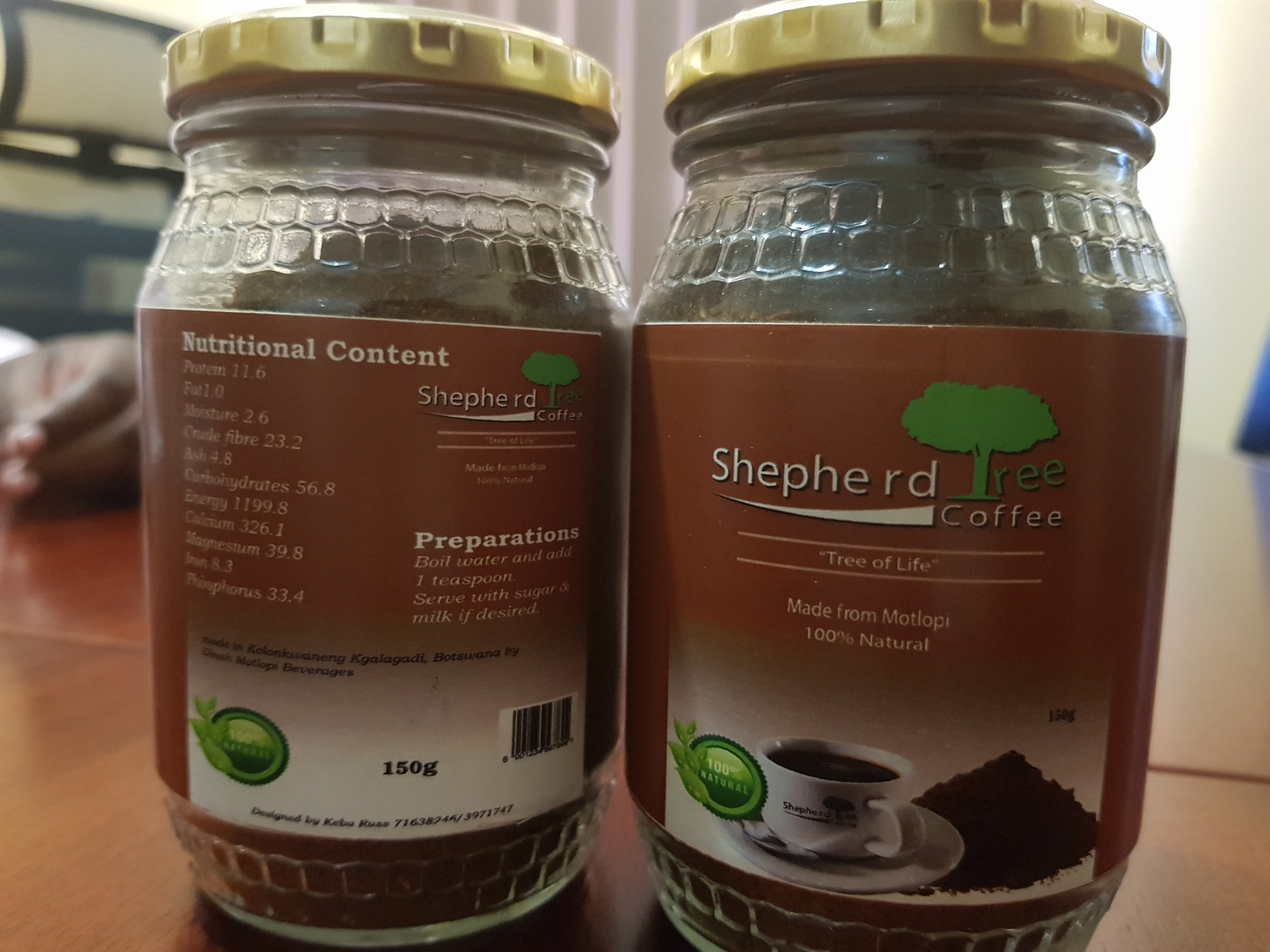
Coffee made from Botswana

This coffee is a product made by a Motswana woman from Kolonkwaneng. It's made from Motlopi (Shepherd Tree).You can get yourself one for only P25.00 at my book launch on September 7th.Only locally made products will be sold at the stalls.Venue will be announced by Friday.
The LEA Tsabong office has been mentoring and monitoring her progress since inception.Mpho Leboane and Mbaki Letso Moiteelasilo have been quite helpful in assisting her with marketing #proudlyBW

University of Botswana Medical School

Since its inception in 2009, the UB Medical School has so far graduated 200 doctors and most of whom practise in public hospitals - Dean of Faculty of Medicine, Dr Oatlhokwa Nkomazana.

Thursday, August 16, 2018

Exhibition at Nhabe Museum

Exhibitions are an opportunity for a large number of buyers and sellers in an industry to come into a direct contact with each other at the same time.They offer an unparalleled and ideal opportunity to show case products and services to a highly targeted audience. For such reasons, Nhabe Museum will conduct a market craft on the 25th of August at 0900hrs to 1500hrs. This will help our local artists establish and maintain good relations with their customers. This event will be free.

Friday, August 3, 2018

Association between depression in carers and malnutrition in children aged 6 months to 5 years

Authors: Keneilwe Motlhatlhedi, Vincent Setlhare, Adewale B.Ganiyu, Jacqueline A. Firth

Childhood malnutrition is an important risk factor for child mortality and underlies close to 50% of child deaths worldwide.1,2 Reducing the prevalence of malnutrition may contribute to the success of child survival strategies.2 In order to curb the high prevalence of malnutrition, it is important to identify and address all factors that contribute to poor child nutrition. Depression, one of the most prevalent mental illnesses, is more common in women of child-bearing age,3 and maternal depression has been linked to poor child growth outcomes in developing countries.4,5 Globally, an estimated 350 million people suffer from depression with higher prevalence in lowand middle-income countries. A South African study estimated depression prevalence rates of 9.7%, while two studies in Botswana found depression prevalence of 25% and 31%. Both studies in Botswana may be an overestimation of the population prevalence of depression in the country as they were done in high HIV prevalence settings and HIV is associated with higher depression levels.6,7 Inclusion of mental health screening of PCGs could help develop more efficacious child nutrition programmes and identify children at higher risk of poor outcomes.

Read full text here https://phcfm.org/index.php/phcfm/article/view/1270/1948

Hope in Aging and Dementia!